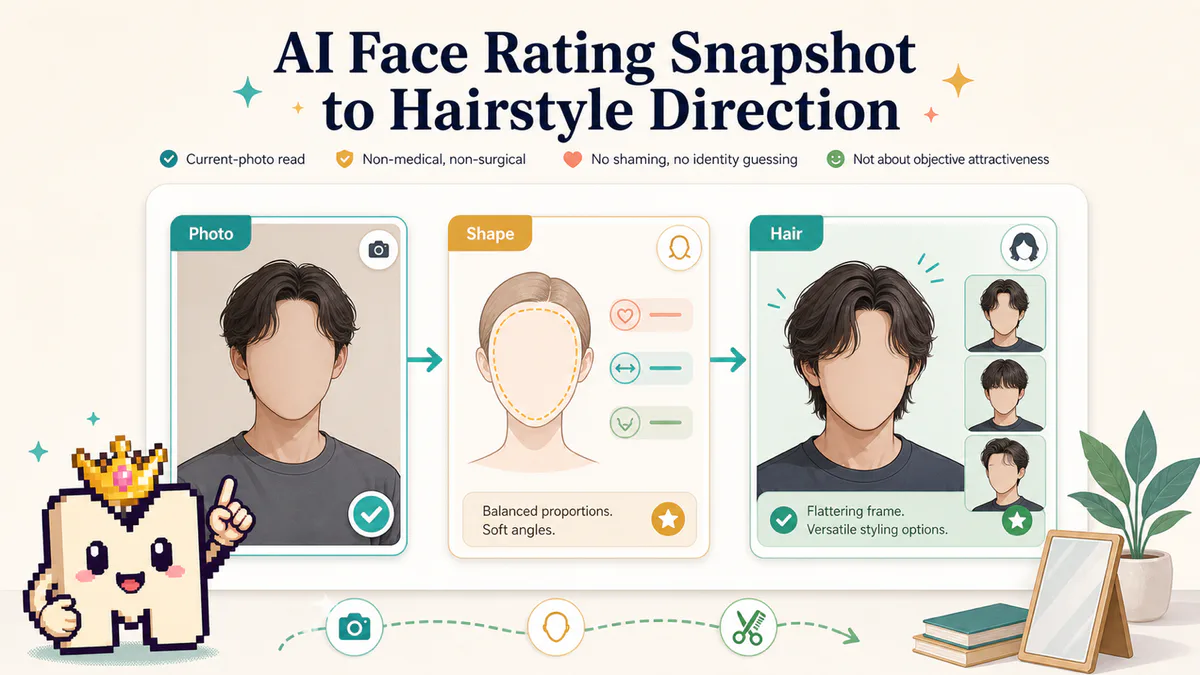
AI Face Analysis: An Annotated Example Report
Prepare a specific analysis request, follow the link from observation to action, and ask for a focused report revision when your constraints change.
TL;DR
The shortest version before the full guide.
- This is a fictional editorial example, not an actual customer report or a model-performance test.
- Every observation below refers to the explicitly imagined photo set.
- Priorities include frequency, effort, cost, and a review period.
- The plan tests presentation choices; it does not promise a score increase.
How to read this example
This is a complete, condensed editorial walkthrough of the sections a useful photo-analysis report should contain. It is not a customer case, an actual Agent run, or a test of model accuracy. The person and the three views below are fictional. No photograph on this page is presented as evidence for the observations.
Use it to prepare your request and judge the report you receive. Check whether each recommendation follows from a named observation and fits your constraints. A real report should use your supplied photos and conversation, rather than copy this fictional plan.
Start with a complete request
Sign in at AI Face Analysis. You can start with general consultation; the optional Your Profile form helps organize your preferences. For a full personalized report, supply the front, 45-degree, and profile photos when requested. A free rating is not a prerequisite, and the analysis does not generate hairstyle images.
The fictional user below wants a work portrait and a routine they can maintain. Here is their complete request. Copy the structure and replace every preference with your own; upload actual photos through the photo slots rather than describing imaginary ones.
That request gives the Agent a use case, a time constraint, purchasing preferences, and clear deliverables. “Tell me everything wrong with my face” gives it much less useful direction.
Example input coverage
| Imagined input | What the scenario supplies | Important limit |
|---|---|---|
| Front view | Neutral expression, readable face, fringe covering part of the forehead. | The complete hairline is hidden. |
| 45-degree view | Hair moved slightly aside; a visible beard outline. | The arrangement differs from the front view. |
| Profile view | Side outline visible, with overhead light casting a strong shadow. | The shadow makes a firm contour comparison unreliable. |
| Stated context | Five-minute routine, existing supplies, work-photo goal. | Budget and maintenance are reported by the user, not inferred from the images. |
The views support a discussion of visible styling and capture conditions. They do not establish permanent facial proportions, a clinical skin or hair condition, or an objective attractiveness score. In this example, the hidden hairline and profile shadow limit those observations, but the available views still support the work-portrait and routine plan. Clearer retakes can help a later comparison; they are not a reason to withhold the whole report.
Executive read
The largest immediate opportunity is consistency. Two inputs use different hair arrangements, and one uses light that changes the apparent outline. Before drawing a firm conclusion about the side profile, create a repeatable baseline. Preserve the comfortable expression and the readable front-view framing.
Start with one hair-arrangement experiment and one photo-setup correction. Keep beard maintenance simple. There is no reason in this scenario to buy several products, chase a tier label, or draw a strong conclusion from the shadowed profile.
Strengths worth preserving
The imagined front image has a relaxed expression and enough face visibility for ordinary presentation feedback. Keep that expression as the comparison baseline rather than forcing a squint or a tense jaw. The work-photo goal is also specific enough to evaluate: the user needs an image that remains recognizable and repeatable.
The routine already uses familiar supplies. Retaining those reduces the number of variables and makes it easier to tell whether a new arrangement is practical. A plan that only works after a long styling session would conflict with the five-minute limit, even if its first photograph looked pleasing.
Evidence and what remains uncertain
| Observation in this fictional set | Interpretation | Next check |
|---|---|---|
| The fringe covers more forehead in the front view than in the angled view. | Hair arrangement changes what can be seen. A firm face-shape label is premature. | Repeat the front view with the hair temporarily moved aside. |
| The profile has a deeper shadow under the face. | The outline cannot be separated confidently from the light. | Use the same camera position with softer front-side light. |
| The beard outline is visible in the angled view. | It can be used as a maintenance reference, but one view does not settle symmetry. | Check the front retake before changing the outline. |
| The user wants a short routine. | Maintenance burden belongs in the priorities. | Time the arrangement during an ordinary morning. |
The report does not convert these observations into certainty about bone structure, identity, health, or social outcomes. If the new views contradict an initial impression, revise the impression. The priority is a decision supported by readable evidence.
Priorities and actions
The costs below describe the fictional plan’s assumptions, not MogScore’s service pricing or a quotation from a salon. Check current product pricing separately before a paid Agent request.
| Priority | Action and frequency | Cost and maintenance | Observation period |
|---|---|---|---|
| 1. Repeatable capture | Choose one camera position and soft light. Take a baseline set, then repeat once a week. | No purchase assumed; about ten minutes for each photo set. | Two weekly comparisons before judging consistency. |
| 2. Hair arrangement | Try an open-forehead arrangement on three ordinary mornings, then compare with the existing fringe. | Use the existing comb and supplies; keep total morning grooming within five minutes. | One week for each arrangement. |
| 3. Beard outline | Use a clear front photo to check the current edges; tidy only with the user’s familiar routine when needed. | No new equipment assumed; record any added time. | Review at the end of week three. |
| 4. Optional haircut brief | If a preferred arrangement stays practical, describe the coverage and upkeep wanted at the next ordinary appointment. | No extra appointment assumed; obtain a local quote if changing the service. | Review after normal daily use, not only a freshly styled photo. |
Do not make all changes together. If the preferred photograph also uses a different crop and expression, it cannot isolate the styling choice. Record those differences instead of attributing the whole impression to the haircut.
A 30-day start plan
In week one, prepare the baseline. If you want a closer hairline or profile comparison, include the clearer views suggested above. Record camera position, light, expression, hair arrangement, and approximate routine time. Keep the original files. An unreadable detail stays uncertain rather than becoming a guessed observation.
In week two, test the open-forehead arrangement on ordinary mornings. Keep the capture setup consistent. Note whether the style stays comfortable through the day and whether it fits the five-minute routine. A photograph taken immediately after styling is only part of that check.
In week three, return to the existing fringe for a comparable period. Use the same capture conditions. Check beard edges with a readable front view, and keep any maintenance within the familiar routine. There is no requirement to choose the arrangement with the most flattering single frame.
In week four, choose based on repeatability, comfort, effort, and the intended work-photo use. Select one current portrait and retain the capture notes. If neither arrangement fits the constraint, ask a focused follow-up question with that information instead of adding more products.
A 90-day progression path
During days 31–60, keep the chosen arrangement through normal daily use. Review once a week, rather than rerating yourself repeatedly. If maintenance exceeds the time limit, simplify the arrangement. If a haircut is already planned, bring the preferred coverage and maintenance notes to the appointment.
During days 61–90, check whether the routine still works as the hair grows. Repeat the baseline before making another styling change. Adjust only the step that has become impractical. The purpose of this period is to observe upkeep and consistency; it is not a promise of physical transformation within 90 days.
Recommendations to avoid
Avoid buying a bundle of products before the baseline is clear, inferring a permanent contour from overhead shadows, or treating a generated hairstyle image as proof of the result. Avoid forcing an uncomfortable expression for an eye-area label. This fictional plan also provides no basis for medication, supplements, surgery, or a clinical hair-loss classification.
An attractive illustration can help communicate a styling idea, but it can change facial details and maintenance expectations. Compare the original when using such a reference. The hairstyle guide shows that limitation with an existing AI illustration.
When a professional is the better next step
A barber or stylist can assess whether a requested cut suits the actual hair texture and maintenance brief. A persistent skin, hair-loss, or eye concern belongs with an appropriate health professional, rather than a photo-based presentation report. This example supplies no diagnosis or treatment advice.
A simple progress check
At each weekly review, ask four questions: Is the photo setup comparable? Is the intended area readable? Does the arrangement remain comfortable? Does the routine stay within five minutes? Record “unclear” if the input cannot answer a question. That is useful information for a retake or a follow-up.
Success in this example means a repeatable work portrait and a routine the fictional user can maintain. It does not mean reaching a face tier or guaranteeing other people’s reactions. To prepare your own readable inputs, use the camera setup guide.
Use a follow-up to explain or revise the report
An explanation question and a request to change the saved plan serve different purposes. To understand a recommendation, ask: “Which observation led to the hair-arrangement priority, and what would make that observation uncertain?” To change the deliverable, state the new constraint and explicitly ask for a report revision.
Here is a hypothetical revision request after the user tries the routine. It is a template, not a report of an actual outcome:
Review current pricing and any Credit requirement shown in the app before a paid analysis or revision. You can revisit a saved report without requesting a new analysis. For a hairstyle image, use AI Hairstyle separately; the conversation delivers a Markdown analysis rather than an image edit.
Sources and method
Prepared by MogScore; updated October 2, 2026. The inputs, observations, plan timings, and follow-up scenario are fictional editorial examples. Product steps and report sections were checked against the current analysis entry, photo slots, and photo-analysis guidance. This walkthrough is not a completed Agent run, an accuracy evaluation, or a customer outcome. A real report's headings and priorities may vary with the user's goal and available evidence.
Frequently Asked Questions About AI Face Analysis: An Annotated Example Report
Answers to common questions about this guide.
Discuss your own presentation goal
Start with a focused question and your practical constraints. A full photo report is optional.
Related articles
Continue with the next setup, glossary, or product guide.
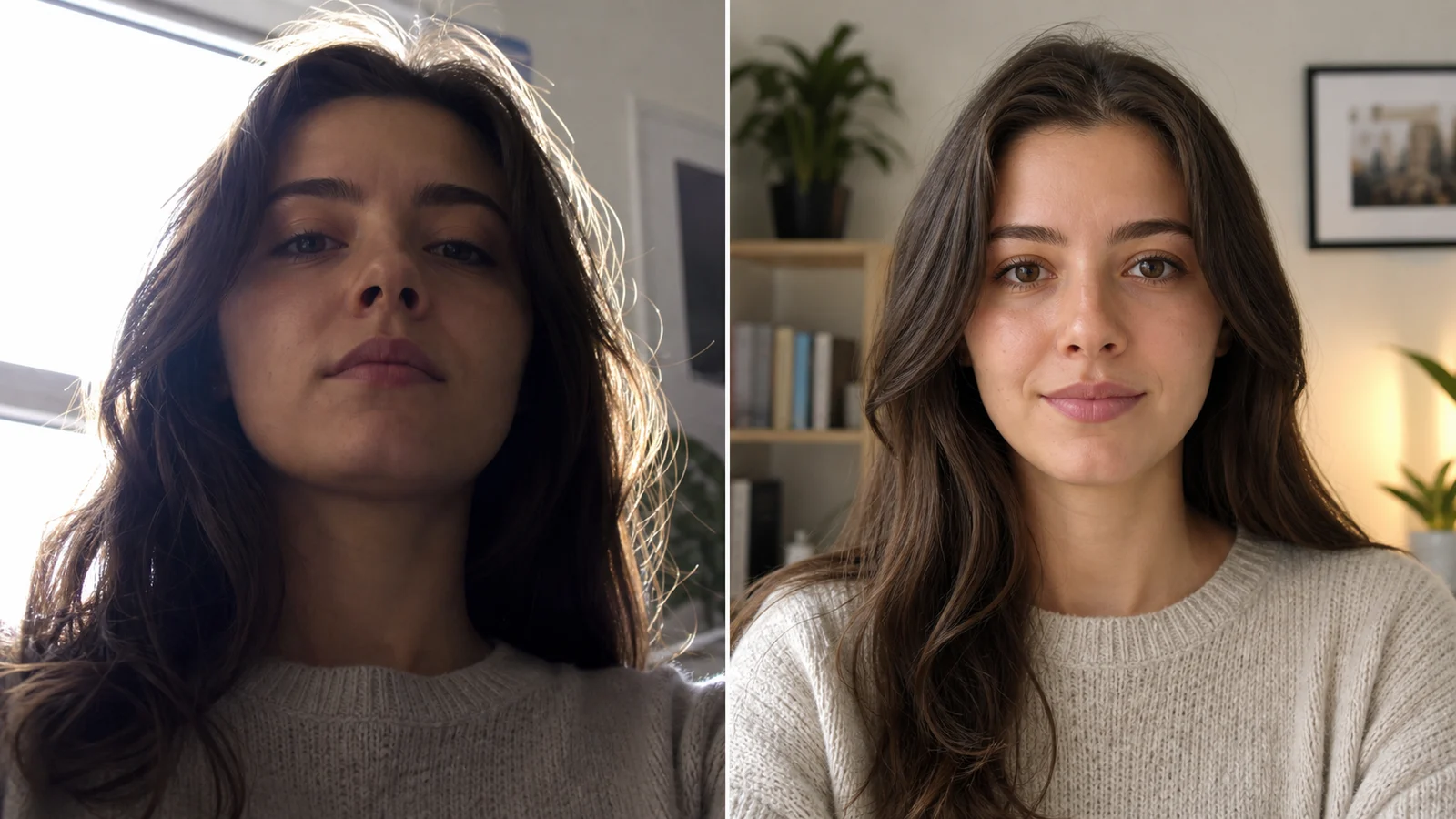 How-toCamera Setup for Repeatable Face Photo ComparisonsMake a repeatable baseline, keep a capture note, and run one useful retake without changing the whole setup.